

29 September 2026
Torkmar launches a practical, jargon-free handbook showcasing how integrated electric systems extend cruising range and redefine the on-water experience.
British Marine member Torkmar has officially published a practical new handbook titled Successful Electric Boating. Designed for boaters considering the transition to electric propulsion, the guide cuts through complex technical terminology to demonstrate how aligning motor, battery, solar, and onboard power systems keeps vessels cruising further and quieter.
Rethinking Range and On-Water Experience
Range anxiety remains one of the primary concerns for boat owners considering electric propulsion. Torkmar’s guide addresses this directly, outlining actionable strategies to connect motors, controllers, battery banks, and solar arrays into a single, efficient ecosystem.
Beyond hardware considerations, the guide highlights a fundamental shift in perspective: electric boating is not merely replacing a diesel engine with an electric motor. When every component on board is tuned to operate in harmony, energy consumption drops significantly, allowing boaters to enjoy a peaceful, silent voyage.
When you ease back on the throttle and make sure every system on board works well together, you stop rushing to hit the next berth or mooring. Cruising itself becomes the best part of the day.
Tim Knox Managing Director at Torkmar Ltd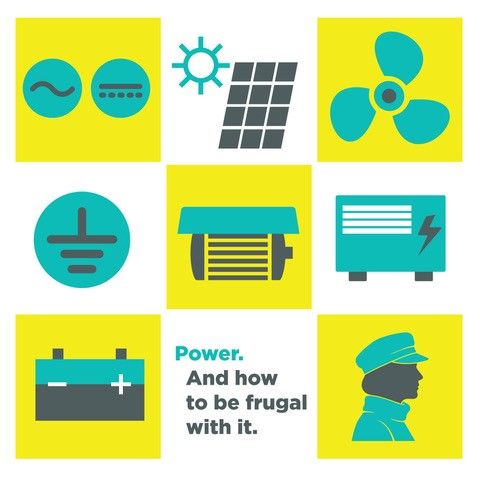
Key Topics Covered in the Handbook
The handbook provides a comprehensive breakdown of practical engineering rules, energy efficiency strategies, and system integration standards:
- 3 Core Engineering Rules: Practical design principles—the 'Lazy Engineer' rule (minimising energy draw), the 'Grandma' rule (eliminating wasteful loads), and the 'Car Window' rule (prioritising the cruising experience).
- AC vs DC Power Management: Avoiding inverter conversion losses, sizing charger-inverters correctly, and running equipment from native DC power where possible.
- Torque Over Kilowatts: Why continuous torque—rather than motor kW—is the key metric for turning large displacement propellers efficiently.
- Propeller & Hull Geometry: How surface area and blade dimensions impact underwater thrust.
- Shore Power & Galvanic Protection: Evaluating galvanic isolators versus isolation transformers to safeguard steel hulls against stray current corrosion.
- Practical Generator Configuration: Optimal sizing, loading (operating at ~80% capacity), and lagging hospital silencers for whisper-quiet winter charging.
- Solar Panel Substrates: Comparing rigid and semi-flexible solar cells, and why epoxy fibreglass substrates are essential for thermal movement on steel roofs.
- Battery Chemistries & Monitoring: Comparing LiFePO4 and Lead Carbon, cell equalisation, BMS protections, and unifying CAN bus/Venus OS communications.
- Cabling & Marine Craftsmanship: Strict standards for tri-rated cables (BS 6231), heat-shrink insulation safety, exact terminal torque settings, and voltage-rated fuses.
Availability & Access
The Successful Electric Boating handbook is available to read or download free of charge directly from the Torkmar website at torkmar.com/downloads/