

29 January 2026
Much of the marine industry’s digital infrastructure was built for a different era. While many platforms have modernised their appearance, the underlying systems often remain rooted in legacy technology, rigid data structures, and manual workflows that no longer reflect how people actually buy and sell boats online.
Over the past twelve months, this disconnect has become increasingly apparent.
Since its launch in January 2025, Tack and Jibe has evolved rapidly in response to real user behaviour rather than fixed assumptions. Buyers were not searching in neat specifications, sellers struggled with complex listing processes, and both sides expected platforms to offer more guidance, clarity, and intelligence.
The February 2026 release of Version 3 represents a decisive shift: from static listings toward an intelligent, AI-assisted marketplace designed around how people actually think and act.
AI as Practical Infrastructure, Not Hype
In many sectors, artificial intelligence is treated as a headline feature. In practice, its real value lies in quietly removing friction from everyday tasks. In the marine sector, this friction often appears at two critical points: searching for the right boat and creating an effective listing.
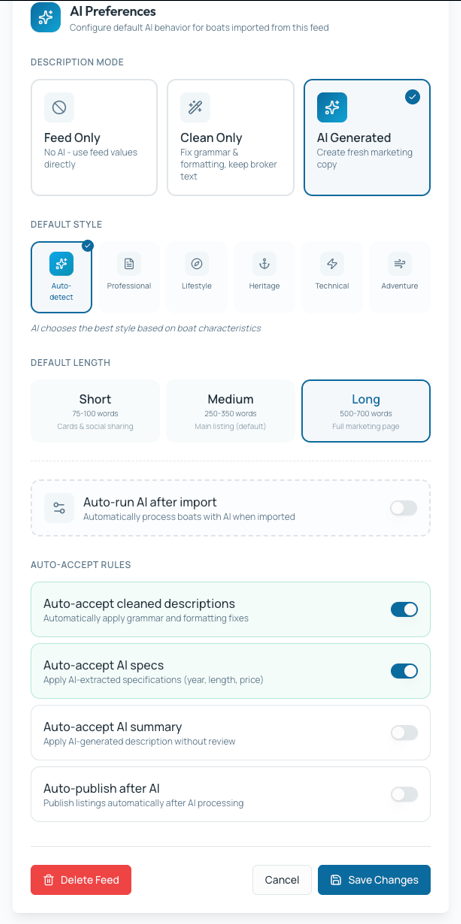
One of the most visible changes in V3 is the introduction of natural language search. Rather than forcing buyers to translate their intent into rigid filters, users can describe what they are looking for in plain English; for example, “a small to medium-sized boat under £100,000 for summer use on a river.”
The AI agent interprets intent, usage, budget, and geography, returning relevant options without requiring the buyer to understand technical classifications before they begin.
Smarter Listings Through AI Support
For sellers, the challenge is rarely a lack of information, but uncertainty about how best to present it. Writing effective descriptions, completing mandatory fields, and knowing whether a listing is “good enough” can be daunting, particularly for private owners.
AI-powered description tools allow sellers to rewrite or enhance their listings instantly, improving clarity and structure without requiring marketing expertise. To reduce manual input further, smart field population tools scan the written description and automatically populate structured data wherever possible, improving consistency and reducing errors.
Multiple Ways to Search, One Intelligent Platform
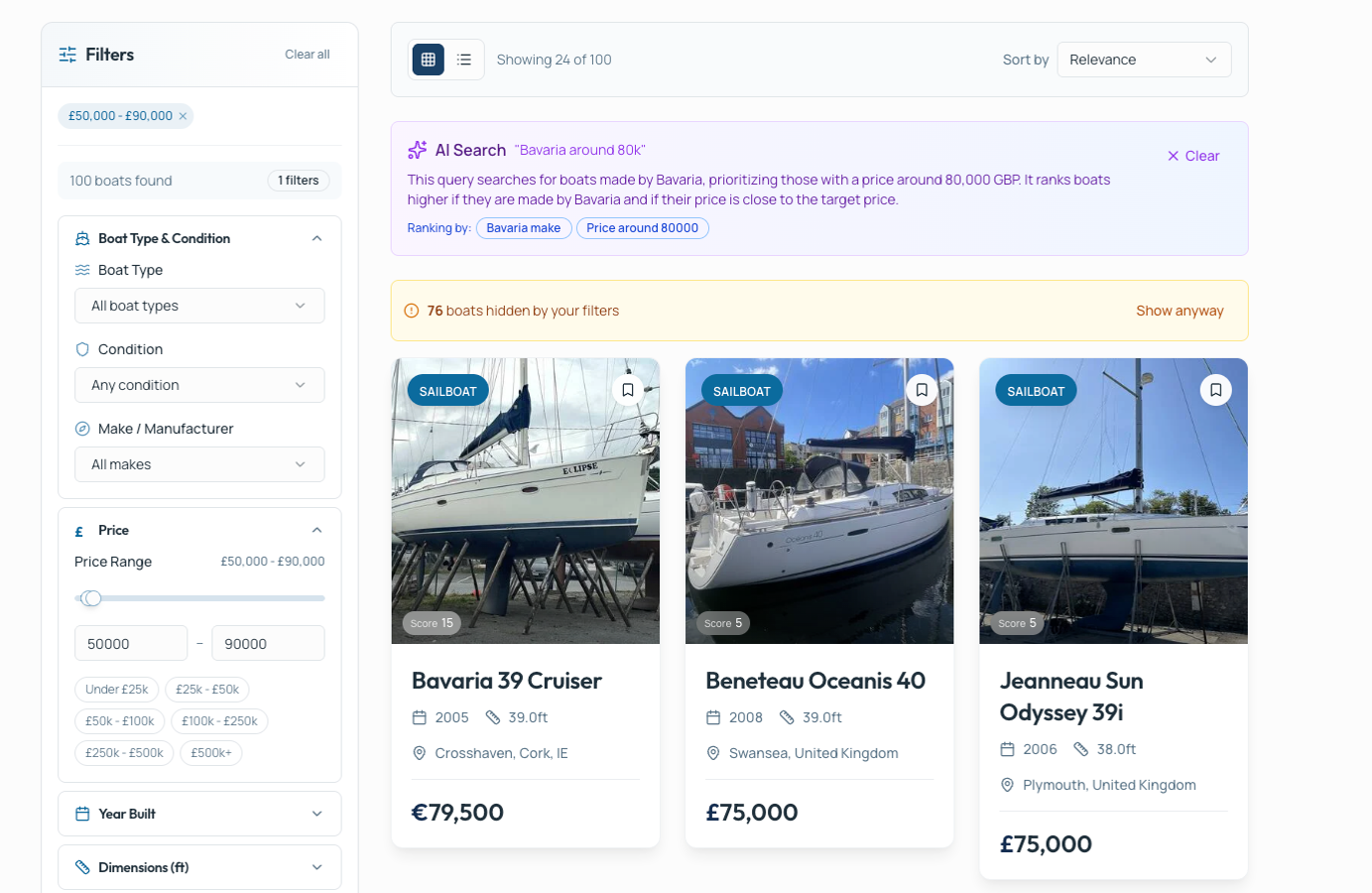
Recognising that not all users approach the market in the same way, V3 has been designed to support multiple, equally powerful avenues of search.
For buyers who know exactly what they are looking for, advanced filters and free-text keyword search allow precise refinement by specifications, features, and terminology. These tools remain familiar, fast, and highly configurable.
For those who think more visually or geographically, an interactive map-based search provides an alternative way to explore available boats by location. This allows users to browse regionally, understand proximity, and discover opportunities they may not have actively searched for.
Together, these options are designed to accommodate every type of visitor, from experienced buyers with defined requirements to newcomers who are still exploring what might suit them best. Rather than forcing users into a single way of searching, the platform adapts to how individuals naturally think and browse.
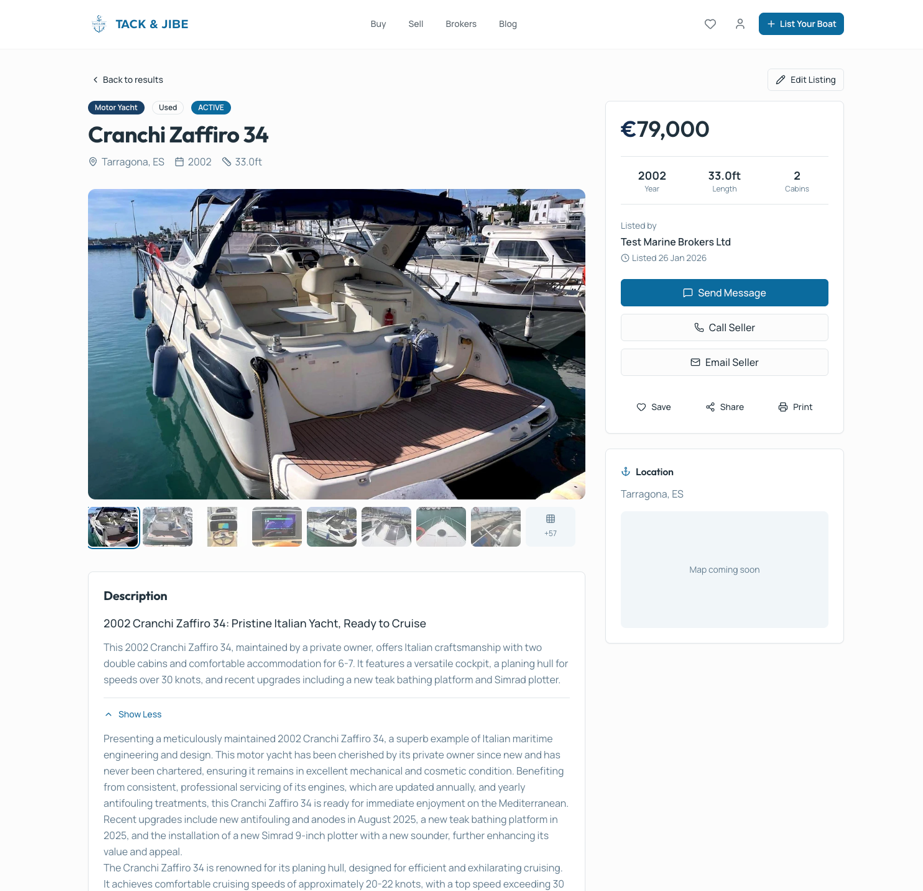
Alongside this, an AI-powered traffic-light system provides real-time guidance during the listing process. Missing information, weak sections, or opportunities for improvement are clearly highlighted, helping sellers create stronger listings without guesswork.
Building Intelligence in to the Platform
A key part of the transition to an AI-led platform has been strengthening the technical leadership behind it. In preparation for Version 3, Tack and Jibe brought Pedro Monteiro into the business to lead the platform’s architecture and AI development.
With decades of experience in software engineering and a long-standing focus on applied artificial intelligence, Pedro has worked across complex, data-driven systems where scalability, automation, and intelligent workflows are critical. His approach has been instrumental in ensuring that AI is embedded as practical infrastructure rather than treated as a surface-level feature.
This focus on experienced, specialist engineering reflects a broader philosophy behind V3: meaningful innovation comes from combining deep technical understanding with real-world user behaviour.
A Broader Industry Shift
What unites these developments is intent. AI is not being used to replace expertise, but to support it; guiding users, improving data quality, and reducing friction at every stage of the journey.
Across the marine sector, expectations are changing. Platforms are no longer judged solely by how many listings they host, but by how effectively they connect the right buyers and sellers, how confidently users can navigate the process, and how well technology adapts to human behaviour.
As intelligent systems become embedded into digital marketplaces, guidance and adaptability are fast becoming baseline expectations rather than differentiators.